Reduce fleet costs. Driver behaviour is where the saving starts.

The driver controls all the operating costs of the vehicle. Fuel, vehicle wear, collision damage and insurance premiums are all directly influenced by driver behaviour on the road. The Professional Development Plan (PDP) helps Fleet Operators address that, consistently, month on month.

The hidden cost of driver behaviour

Every cost line in a fleet operation is under pressure. Fuel prices, maintenance schedules, insurance renewals, collision management – the financial demands on Operators are significant. What doesn’t always get the same attention is how much of that cost is directly influenced by driver behaviour on the road. Address the behaviour and the impact goes across the board.

One change in behaviour. Multiple cost lines move.

Collision damage

The repair bill is only part of the cost. Downtime, replacement vehicles, management time and third party claims all follow

Vehicle wear and tear

Harsh acceleration and braking are the biggest drivers of avoidable wear. When driving style improves, maintenance costs fall.

Fuel efficiency

A 3–11% improvement in MPG is achievable through better driver behaviour. See our fuel efficiency page for more.

Insurance premiums

Operators who reduce their collision rate and evidence structured driver training are in a stronger position at renewal.

The costs that are hardest to see are often the easiest to reduce

These are everyday driving habits, and they are behaviours that can be improved.

  • Harsh acceleration and braking increase fuel use and vehicle wear
  • Rushing under pressure leads to more collisions and more cost
  • Poor manoeuvring on site is the most frequent source of avoidable damage
  • Inconsistent driving standards create inconsistent costs across the fleet

It’s not about overhauling your business – it’s about giving drivers the awareness and reinforcement to drive better, consistently.

The Professional Development Plan is built to do exactly that, helping drivers understand these behaviours and improve them over time through consistent reinforcement.

Driver development that impacts your bottom line

Better driving habits, applied consistently across your fleet, reduce costs across multiple lines at the same time. The savings compound month on month.

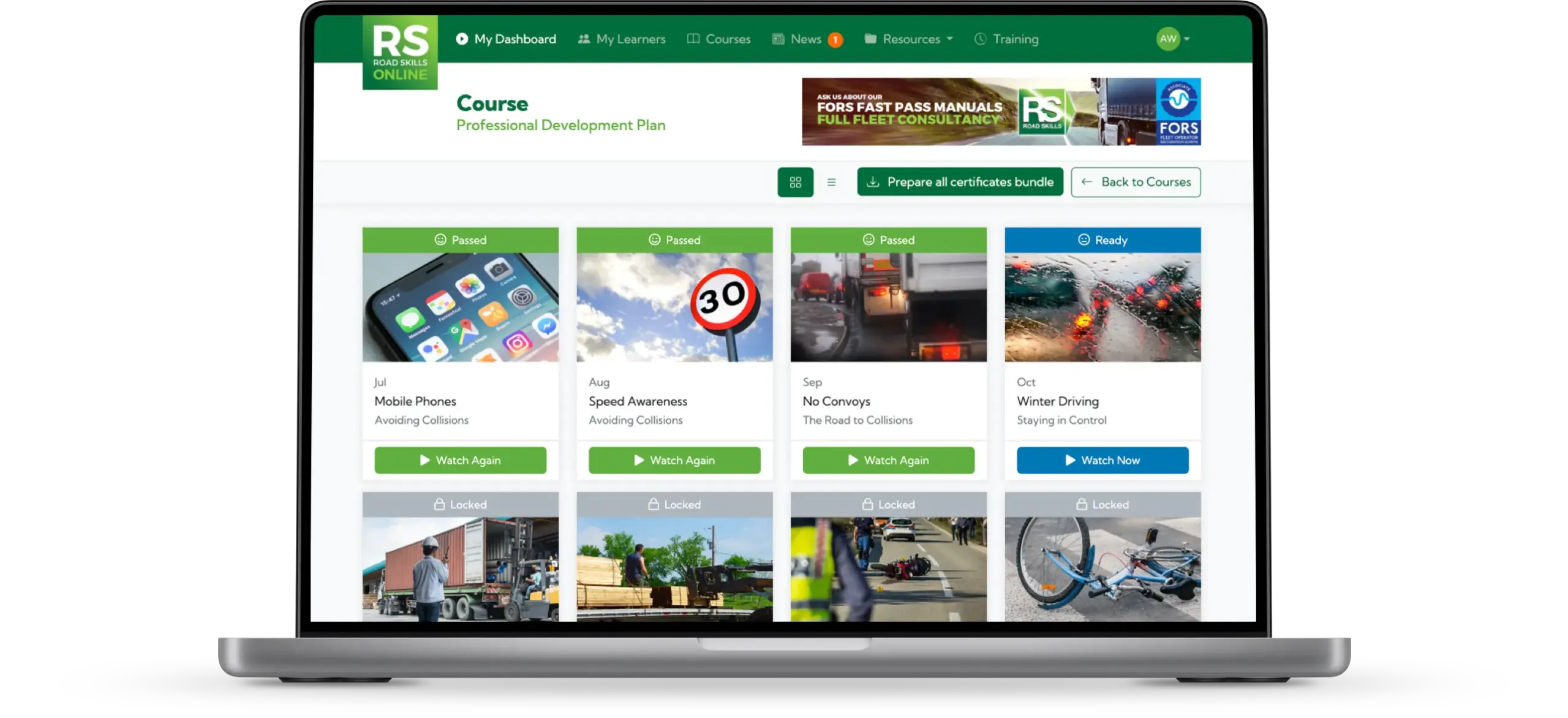
Monthly Toolbox Talks

Short, practical, focused learning covering the driving behaviours that influence fuel use, vehicle wear and collision risk - completed in 15–20 minutes.

Consistent reinforcement

The same messages revisited regularly so driving behaviour improves over time, not just after a single briefing.

Practical, relevant content

Focused, relevant content built around the decisions drivers actually make on the road.

Full visibility for managers

Track engagement, completion and progress across your fleet in your live dashboard.

The impact of better driver behaviour on your bottom line

When drivers perform consistently, the financial benefits follow across every area of the operation.
  • Lower fuel spend
    Improved MPG across your driver base reduces one of your largest and most immediate operational costs.
  • Reduced maintenance costs
    Smoother driving extends tyre, brake and engine life, reducing the cost and frequency of replacements.
  • Fewer collision-related costs
    Less vehicle downtime, lower repair bills, reduced management time and stronger third party claim position.
  • Better insurance position
    A sustained reduction in collisions and evidence of structured training strengthens your position at renewal. One Operator saw their annual premium reduce by £90,000 following the implementation of the Professional Development Plan.
  • Improved driver retention
    Drivers who feel invested in are more likely to stay - and every driver you retain saves the cost of recruiting and training a replacement.
  • Stronger ESG position
    Better driver behaviour supports your Environmental, Social and Governance (ESG) position - reducing emissions through improved fuel efficiency, and evidencing the ongoing professional development your supply chain increasingly expects to see.
  • More predictable operational costs
    When driver behaviour is consistent, fleet costs become more predictable and easier to manage and forecast.

What Operators tell us

One client realised after year one that their MPG had improved during a period when fuel prices rose significantly across the industry. For a fleet of 35 vehicles, maintaining the same spend while costs rose around them represented a significant saving – one they hadn’t initially connected to the Professional Development Plan at all.

Another saw their annual insurance premium reduce by £90,000 after a sustained reduction in collisions during their first year. Gate post strikes, parked car contacts, site manoeuvring collisions – all down. The saving wasn’t just in the premium. It was in the management time, the vehicle downtime and the third party costs that didn’t happen.

A third calculated that each avoided slow-speed collision was saving them between £5,000 and £6,000 in management time, vehicle downtime and repair costs alone.

These are just a few of the conversations we’ve had with our clients about what changes when the Professional Development Plan is in place. In every case the result came from the same place – drivers making better decisions consistently, month after month. One change in behaviour. Multiple cost lines move.

Want to see how it works for your fleet?

See how easy it is to deliver consistent professional development to your drivers every month.

Case Studies

Ready to reduce fleet costs through better driver behaviour?

Get a closer look at how the Professional Development Plan works.